Why Traditional Consulting Is Failing Financial Institutions—and What Comes Next
By Stephen Hoops
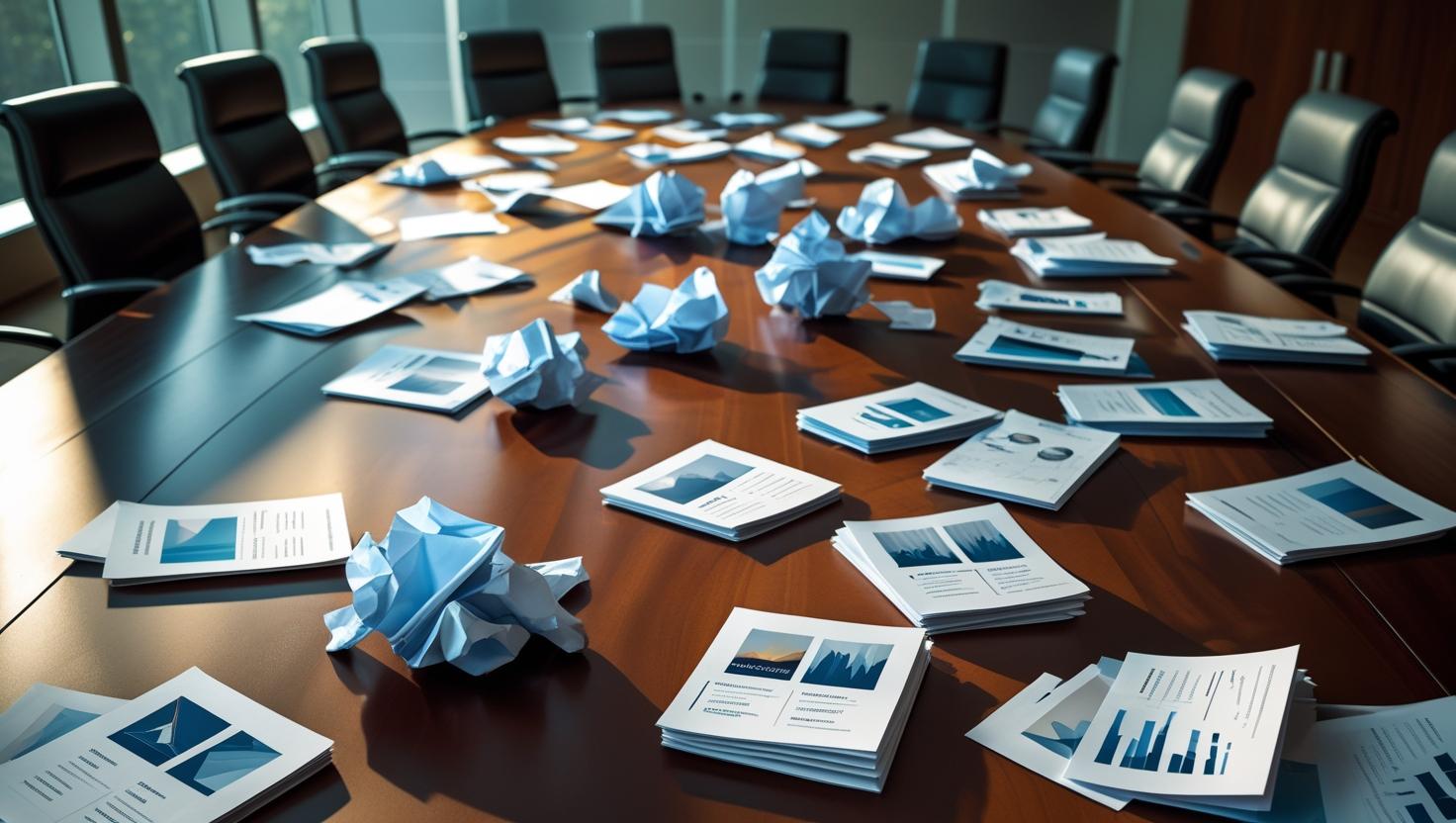
“We’d just spent six figures on what we thought was help. What we got was a 90-page deck—crammed with recycled templates, jargon, and ideas that looked smart in slides but crumbled under scrutiny. The senior partner made a showy entrance at kickoff. After that? Ghosted. We were left with a team of MBAs who’d never sat in a risk role, let alone owned a P&L. None of it worked. None of it was real.”
If you’ve been in that room—surrounded by PowerPoint but starving for progress—you’re not alone. We’ve heard some version of this story too many times to count.
If you’ve been left holding the bag when the deck fails to deliver, we built Predictive Analytics Group for you.
If you’re like most mid-sized financial institutions, you don’t have the luxury of big strategy budgets or a bench of unused analysts. When you bring someone in, you expect results. You don’t want another deck. You want answers that hold up under pressure and a partner who can sit in the seat and make the tough calls with you.
That’s why a recent LinkedIn post by James O’Dowd reflecting on Joseph Nocera’s article “The Consulting Crash Is Coming,” struck a nerve that inspired me to comment and expand on here. O’Dowd’s viral post made a powerful case that Big Tech is moving into territory that once belonged to consultants not by offering advice, but by embedding infrastructure. He pointed out that OpenAI isn’t selling strategy decks. They’re embedding engineers and building systems clients can’t live without. He describes it as a “moat” that stays behind after the consultants leave. The moat isn’t the insight. It’s the implementation that becomes permanent.
The huge comment thread told an even richer story, with hundreds of reactions from operators, analysts, and executives who’ve experienced the shortcomings of traditional consulting firsthand:
- Consulting firms oversell experience but underdeliver execution—especially when senior talent is replaced by junior staff after kickoff.
- Clients are overwhelmed with analysis but left without action—decks don’t translate to on-the-ground decisions.
- AI is misused as a buzzword or black box, with little understanding of how to integrate it meaningfully into real-world processes.
- Experienced practitioners are rare, and clients are actively seeking those who’ve sat in the seat and know what’s truly at stake.
None of this is news to those of us who’ve spent time on the client side. Before founding PAG, I was the one sitting in the room, flipping through a 90-slide deck, wondering why nothing on page 47 matched how the business really worked. Many of those decks from large brand-name consulting firms were immediately deposited in filing cabinets to gather dust.
Different Firms, Different Problems
The problem isn’t that consulting is broken. The problem is that too many firms still think the job ends with advice.
If what you need is more action and less analysis, this is the model you’ve been missing.
- We lead with senior talent. The person who sells the work is the one who does the work. Our average employee has 15-20 years of client-side experience before they ever join PAG. That’s real-world experience you can’t get from an MBA student.
- Most firms show up, diagnose, and disappear. But you need more than a diagnosis; you need a co-pilot. Someone who’s in the room when the tough calls get made. That’s why we stay, sleeves rolled up, until the work is working.
- Clients want more than analysis. They want help making the decisions that follow.
One of the most common frustrations we hear from financial institutions is: “We know there’s a problem—but we can’t see what’s underneath it.” Traditional consultants may identify the symptoms, but they rarely diagnose the root cause. You have to go deeper.
For example, one client came to us hoping to reduce portfolio losses. They’d already spent months with another firm that offered surface-level strategies. But no one had actually asked the core question: What’s broken? We did. And by the end of our diagnostic, we’d found structural issues that the prior engagement had missed completely. Only then did we start building new strategies — ones that actually worked.
Where AI Helps and Where It Doesn’t
AI is part of the conversation now. But too often, it’s used as a shortcut or a smokescreen.
AI isn’t a magic bullet. It’s only as good as the people using it.
Yes, AI can summarize data and surface trends. It can help us identify potential drivers of performance or risk. But it can’t build a tailored segmentation strategy for a $400M portfolio. It can’t decide which of 17 interventions will actually move the needle or navigate a client’s unique regulatory environment.
Most importantly, it can’t sit in a chair across from a CRO or CFO and help make a tough call. That takes experience. That takes judgment. That takes a partner who knows what it’s like to be the one held accountable. It takes someone who understands the art as well as the science with the experience to back it up.
Unused Insights, Unmade Decisions
The real pain most clients are feeling isn’t lack of information. It’s the inability to move forward.
You’ve got data but it’s fragmented across systems.
You’ve got reporting but it’s not actionable.
You’ve got strategies but no clear way to implement or measure them.
This is probably where you feel the strain most, stuck between knowing and doing. That’s where we help you build momentum.
We are integrating AI capabilities into our GOBLIN enterprise data platform, enabling our clients to unify legacy data, build secure role-based reporting, and enable analytics with the right type of model that drives growth without adding headcount.
It’s not just about building dashboards. It’s about building momentum.
A Call to Operators
If you’re feeling this pain, you’re not alone. We’ve built PAG for leaders like you.
You don’t need another deck. You need a partner who can help you:
- Get clarity on what’s really broken
- Build something that actually works
- Use AI when it will actually help solve the problem
- Stand by your side as you implement and improve
We’re not just advisors. We’re operators with analytics in our DNA who actually enjoy getting our hands dirty. And we’re ready to make a difference for you.
Don’t settle for another deck. Choose a partner who’s sat in your seat—and stayed until the job was done. [Reach out when you’re ready.].
Stephen Hoops is CEO and Chief Strategy Officer for Predictive Analytics Group.