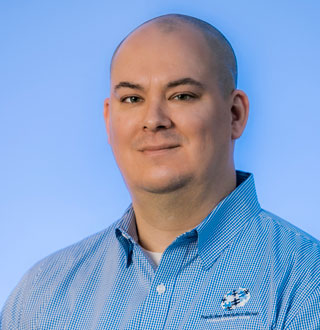

By Dave LaRoche, Managing Partner, U.S. Operations, Predictive Analytics Group
Part 2 of two. [Part 1: Our Best Work Happens in Your Worst Quarter]
Two clients buy the same platform. One changes its loss rate, and one adds another dead pilot to the pile. The difference usually shows up in the first meeting.
The smoothest engagement we ever ran turned on one sentence, spoken before anyone opened our platform.
A chief operating officer at a regional bank brought the head of the data governance group into our first meeting and said, “Give them everything, including the parts we’re embarrassed by.”
No sanitized extract. No cleaned-up sample. The real tables, the orphaned fields, the reconciliation notes somebody scribbled into a spreadsheet in 2019. We had a governed view of their delinquency data in weeks instead of quarters, because nobody spent a month deciding what we were allowed to see.
That sentence was why it worked. The difference between an engagement that moves a loss rate and one that dies in a slide deck is rarely the platform. It is what the client does in the first month.
Why most engagements stall
You have sat through at least one of these. A multi-year “transformation” that ate budget and attention and stalled around the third steering committee. A vendor consolidation that shrank the invoice count and left the charge-offs exactly where they were. A pilot that impressed everyone in the room and then died quietly because nobody owned what came next. “We bought a deck, not a result” is the line we often hear, usually in the first 10 minutes.
The autopsy reads the same almost every time. The analysis was sound. The platform worked. Nothing changed on the client’s side, so nothing changed in the numbers. You can buy the best engine money buys and still lose the race if the car never leaves the garage.
What the strongest engagements share
None of this can be done alone. The engagements that work share a few habits, and not one of them is technical.
- An executive sponsor who can clear a path. Analytics work dies three levels down, where a project manager with no authority asks the data owners to cooperate and gets a slow no. A sponsor who can pick up the phone and say “give them access” is worth more than any feature we sell.
- Real access to the messy data. The urge to scrub everything before the outside team sees it is human, and it costs you the whole advantage. The orphaned fields and the definitions nobody agreed on are the actual problem we are there to solve. Hide them, and we find them in month three instead of week one.
- One internal point person with protected time. Somebody whose job, for the length of the engagement, includes the engagement. A busy executive doing it at midnight between everything else is how timelines slip or subtle things are missed.
- Willingness to act on what the data says. This is the difficult one. Sometimes the analysis says your most profitable segment is quietly your riskiest, or that a product that leadership loves is dragging the book. An answer that only counts when it confirms what you already believed was never worth paying for.
- Patience for something that compounds. A new dashboard gives you a hit by Friday. A governed data foundation pays you back every reporting cycle, every board meeting, every exam, for years. Clients who know which of those two clocks they are on do not panic in week two. (We pulled that difference apart in The Dashboard Was Never the Problem.)
Our side of it
A partnership has two sides, so here is ours.
Our associates average more than 20 years of client-side experience. Most of us started inside financial institutions, in Credit, Collections, Compliance, and Risk, so you are not explaining your business to someone who has never sat on your side of a bad quarter. We have. Usually in a worse one than you have now.
GOBLIN goes underneath your systems as a governed foundation. The source data lives in one place. The definitions are read the same way for Finance, Risk, and Operations. The lineage traces back to the source when an auditor asks, and access runs by role. Clients who have done this have cut data-infrastructure costs by an average of 35 percent and walked into the next exam with a number they could defend.
And we stay in the weeds. The collections queues, the underwriting exceptions, the pipeline that breaks at 2 a.m. We would rather be there with your team than presenting to them. You Don’t Need a Data Science Team. You Need the Right Platform makes the fuller case.
The tell
We know an engagement will be optimized early on when the client stops asking for a cleaner-looking report and starts asking a better question. Where did this number come from, and can I prove it?
When that question shows up, the relationship has turned. They are no longer managing us like a vendor. They are handing over the context and the embarrassing parts instead of holding them back to see whether we catch them. That is the point where the work starts to move.
Before you call
If you are not sure you are even the kind of institution we can help, start there. I wrote about it in [Our Best Work Happens in Your Worst Quarter → LINK ONCE PUBLISHED]. If you already know the answer, and you can picture your COO saying, “give them everything,” you already know who to call.
Dave LaRoche is Managing Partner, U.S. Operations, for Predictive Analytics Group, which helps clients cost-effectively bridge the gap between analysis and impactful decisions. To talk through what a partnership would look like for your team, schedule a discovery call.